Protect Your Relationships with Others…and with Yourself.

This is the last section of the book so it’s the final countdown. I’ve spent over a year with the authors (far longer than the three months in the title), and I’m keen to get on to something new. But there’s hardly a day now when I’m not telling myself to ‘radically accept’ something or other. I’ve also found that when I’m feeling very stuck and a bit sad, I hear the authors in my ear with their encouraging provisos – that such and such a skill is ‘extraordinarily hard in practice’, or that sometimes we’ll only be able to ‘radically accept’ something for a few seconds before the difficult feelings come back again.
So, on with the section, which introduces “the skills for Relationship Effectiveness and Self-Respect Effectiveness. These strategies maximise the likelihood that even as you try to get what you want, you walk away from difficult conversations with your relationships and your self-respect secure – and hopefully improved!”
Enter another acronym – the GIVE skills. These are “stylistic elements that balance your efforts to get what you want while keeping the other person liking you. While the DEAR skills provide the script for what to say, the four GIVE skills are strategies for how to deliver that script in a way that protects your relationships.”
Here are the GIVE skills –
(BE) GENTLE
(ACT) INTERESTED
VALIDATE
(USE AN) EASY MANNER
And here’s some more detail on each of them. Being Gentle, which means respecting the other person and not attacking or manipulating, is how we should all be with each other. It maximises relationship effectiveness, and is crucial in tricky conversations. But it’s very hard to maintain. Being gentle requires a lot of self-knowledge as you need to understand your own reactions. And you have to make a commitment to doing it. It’s worth it, though. I have often seen gentleness in action, and felt it from others. It’s very powerful.
On this note, a bit of sobering research news this week (and something that I can relate to) –
Moving on to the rest of the GIVE skills –
(ACT) INTERESTED
I do this already with people, probably too much, so I’ve tried to rein it in a bit. Acting Interested is about asking questions of the other person and trying to understand their perspective. When I do this, people largely think I’m odd, nosy or trying to interview them. I long for others to ask me about myself, but when they do, all sorts of difficult feelings get stirred up. Tricky, but as a general rule, we should all be more curious about one another. Oh, and an important part of acting interested is not to assume what the other person thinks, or what their intentions are.
VALIDATE
Here’s one I can do. Again, I’m sure I annoy people with it, but it feels the right thing to do, mostly.
“To Validate means to communicate that you understand the other person’s experience and why they felt, thought , or acted as they did. Validation is a relationship-improving superpower! Validation is especially important during a disagreement, because it shifts the focus from who is ‘right’ or winning the argument to a mutual effort to understand and resolve the problem.”
The key point here is - “There is always something understandable in a person’s response to any situation – it is your job to find it!”
There are six levels of validation, and I’m sure I don’t use all of them.
1) PAY ATTENTION.
2) REFLECT BACK.
3) “READ MINDS”: figure out what the other person hasn’t explicitly said about their thoughts and feelings, and verbalize it. Consider what they did say, your knowledge of the person, the possibility that you are reading the situation incorrectly though. For example, “You seem really disappointed - is that right?”
4) UNDERSTAND BASED ON PERSONAL CONTEXT.
5) ACKNOWLEDGE WHAT IS VALID.
6) SHOW EQUALITY: “Treat the other person as your equal. Don’t treat them as helpless or fragile. Don’t behave condescendingly or treat them as inferior. Be yourself, acting as you would with anyone else.”
The last of the GIVE skills is USING AN EASY MANNER. Talking in this style communicates to the other person that the relationship isn’t in danger. This style uses humour and body language to take the tension out of difficult conversations.
Now we’re moving on to the communication skills which help us to feel better about ourselves, aka Self-Respect Effectiveness. These are known as the FAST skills, and I’m very glad to hear about them.
“Like the GIVE skills, the Self-Respect Effectiveness skills are incorporated into your DEAR script to balance trying to get what you want with maintaining your self-respect.”
Here are the FAST skills –
(BE) FAIR
(NO) APOLOGIES
STICK TO YOUR VALUES
(BE) TRUTHFUL
A quick summary of FAST –
(BE) FAIR
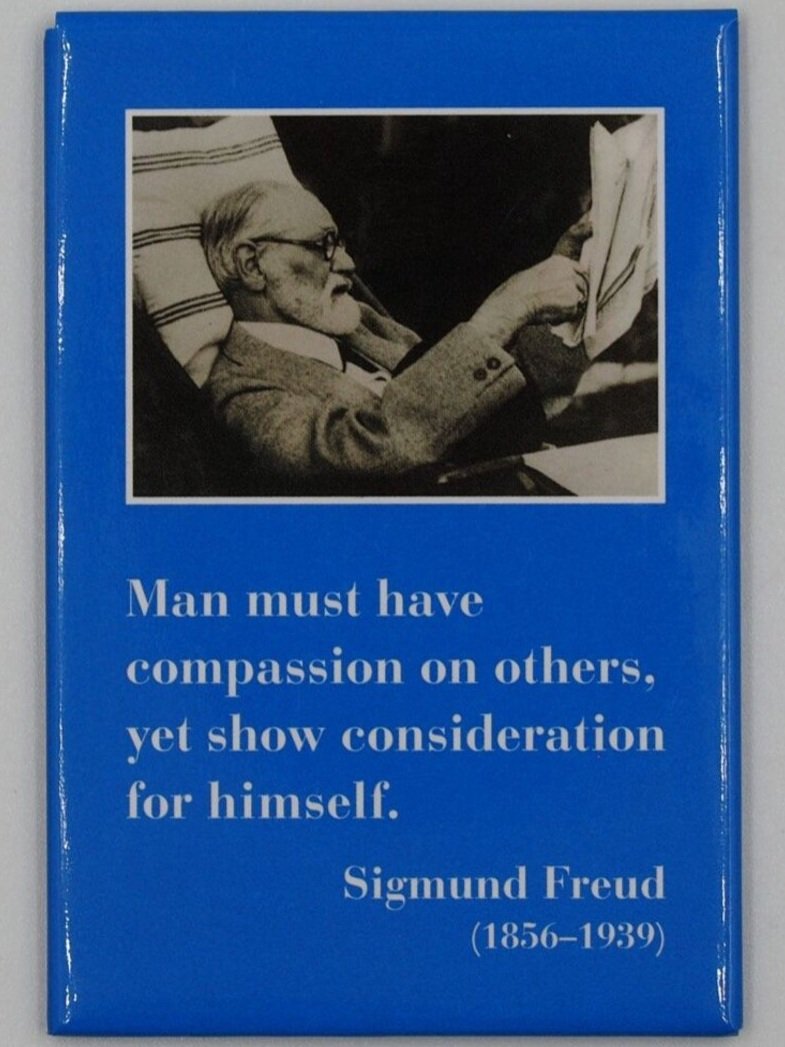
Be FAIR to both yourself and the other person. This is nicely summed up by the fridge magnet below (also on my board of magnets from my travels) -
(NO) APOLOGIES
Don’t APOLOGISE unless it’s called for. “Apologies are appropriate when you have done something that violates your own values. Additionally, at times it can be effective to apologize for the sake of a relationship even if you didn’t intend harm or do something against your values.”
STICK TO YOUR VALUES
“You may be tempted at times to compromise on your values to get what you want, protect a relationship, or gain someone’s approval. However, habitually hiding your true beliefs or repeatedly saying or doing things that you consider immoral can undermine your self-respect.”
(BE) TRUTHFUL
“Be honest rather than lying, exaggerating, or pretending to need help or support when you don’t…Consistent dishonesty is likely to eat away at your self-respect, as it is generally incompatible with acting in a way that leaves you feeling like a capable, effective person. This skill, like all of the FAST skills, is about balance.”
One last point on these skills. We may need to use all of them in a single situation. Like this -
“You may need to clarify your goals and priorities, determine the appropriate level of intensity, and construct a DEAR script with a balance of MAN, GIVE, and FAST skills. In addition, you might need to regulate your emotions first using your Mindfulness, Emotion Regulation , and Distress Tolerance skills!”

Not the easiest of tasks (it actually sounds almost impossible) but, as the authors say, it’s all about practice until the skills become second nature.